


“Every individual matters. Every individual has a role to play. Every individual makes a difference.”
― Jane Goodall
Some Things You Can do Right Now
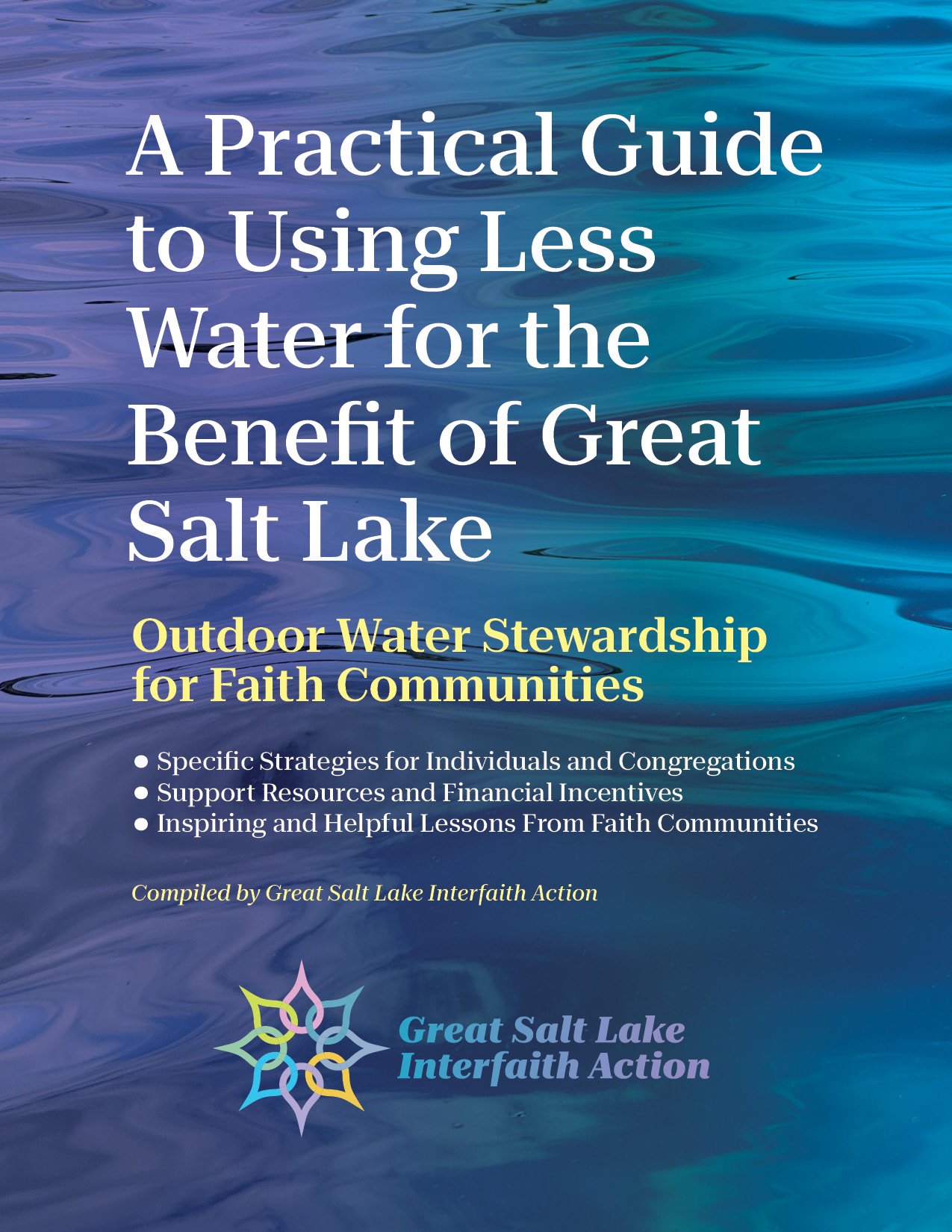
Download, read, and Use Our New Outdoor Water Stewardship Guide for Faith Communities
• Specific Strategies for Individuals and Congregations
• Support Resources and Financial Incentives
• Inspiring and Helpful Lessons From Faith Communities
People of faith are hearing the call to be guardians and stewards of our natural environment. In Utah, much of this stewardship is necessarily focused on our Great Salt Lake (GSL), which faces historic low water levels. Faith communities have a unique opportunity to lead by example, transforming landscapes into expressions of care for this important part of our environment.
We welcome your feedback and suggestions for improving this guide.
Check this out: Utah drought order: KSL News Report: What are the current watering rules in your community?
Become Part of a Great Salt Lake Interfaith Action Team
Water Conservation Team: Provide technical information for implementing a water conservation project, such as how to replace grass with waterwise vegetation and install drip irrigation. And what costs can be expected, and how to obtain financial assistance? This team would also potentially compile lists of contractors and provide landscaping examples (or direct people to where these already exist). This could be one team, or separate ones for home and places of worship. This is a new initiative, so we can use help fleshing it out.
Political Action Team. Provide links to Grow the Flow and/or other organizations, train on how to letter-write to political leaders, and provide information about opportunities for lobbying during the legislative session.
Fill out this Form to Join one of these teams: https://tinyurl.com/JoinGSLIATeam. You don’t have to be an expert—just have an interest in making a difference and willing to learn.
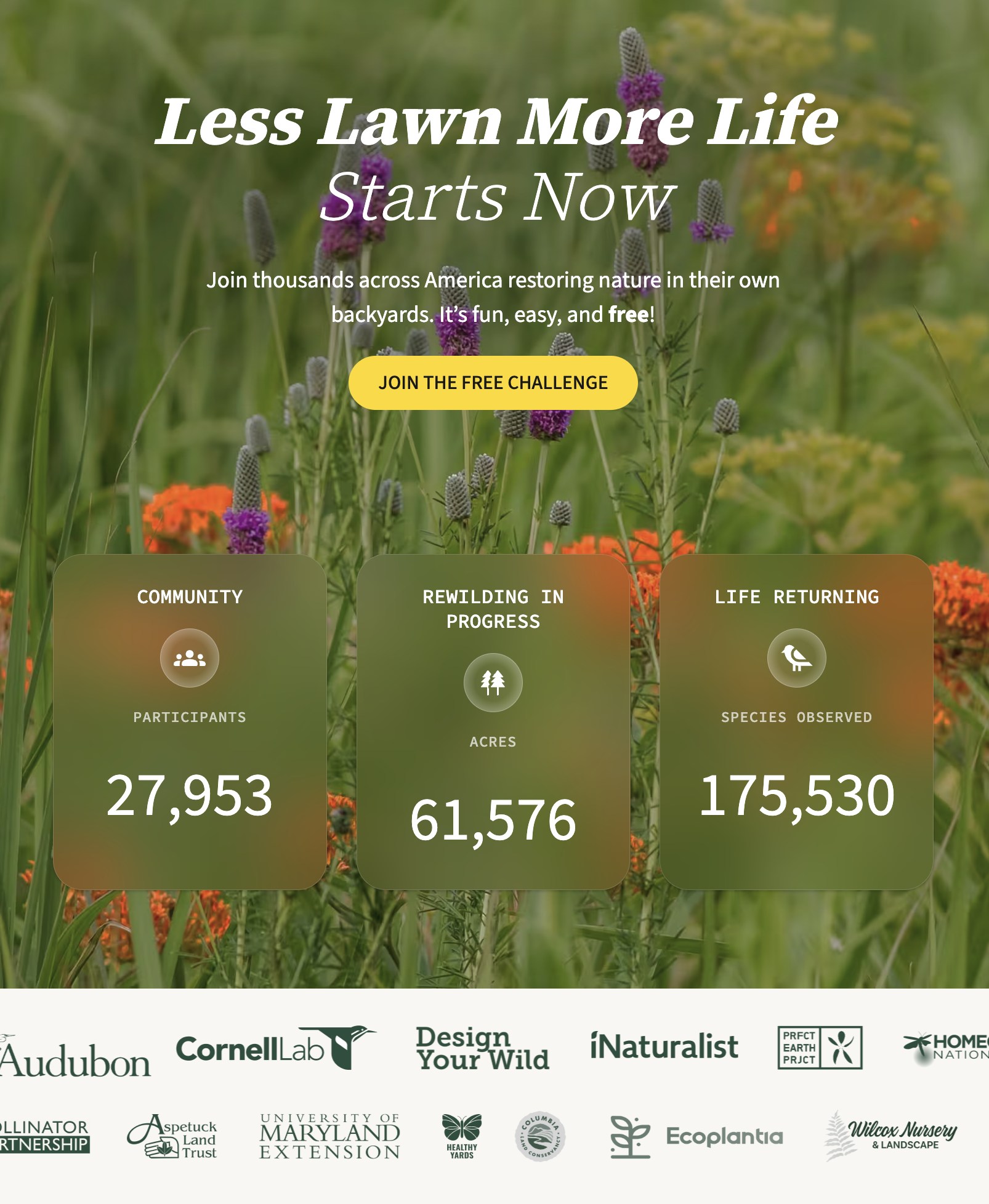
Join the “Less Lawn More Life” Challenge
Join thousands of Americans in a free challenge that's as good for your local water as it is for wildlife.
The Less Lawn More Life Challenge is a free, 12-week program that guides participants through converting their outdoor space into a thriving native habitat—one small step at a time. And it turns out that restoring habitat and conserving water go hand in hand.
The challenge includes a dedicated week on water management—from rainwater harvesting in drought-prone climates, to rain gardens and stormwater management in flood-prone areas, to ways to get involved in watershed protection in your community. But the water story runs through all 12 weeks. Native plants are evolved for local conditions and use far less water than turfgrass. Healthy soil holds more rainfall and reduces runoff. And eliminating pesticides and fertilizers directly protects our waterways.
The challenge kicks off May 7th with a free live keynote from Robin Wall Kimmerer, botanist and author of Braiding Sweetgrass. Every participant gets a free Wildr Score—a 5-minute ecological health assessment for their outdoor space.
Less lawn means less water use, fewer chemicals in our waterways, and healthier watersheds.
It's all FREE and it starts May 7th (but you can jump on at any time). Sign up at lesslawnmorelife.com to have the information come to your own email.
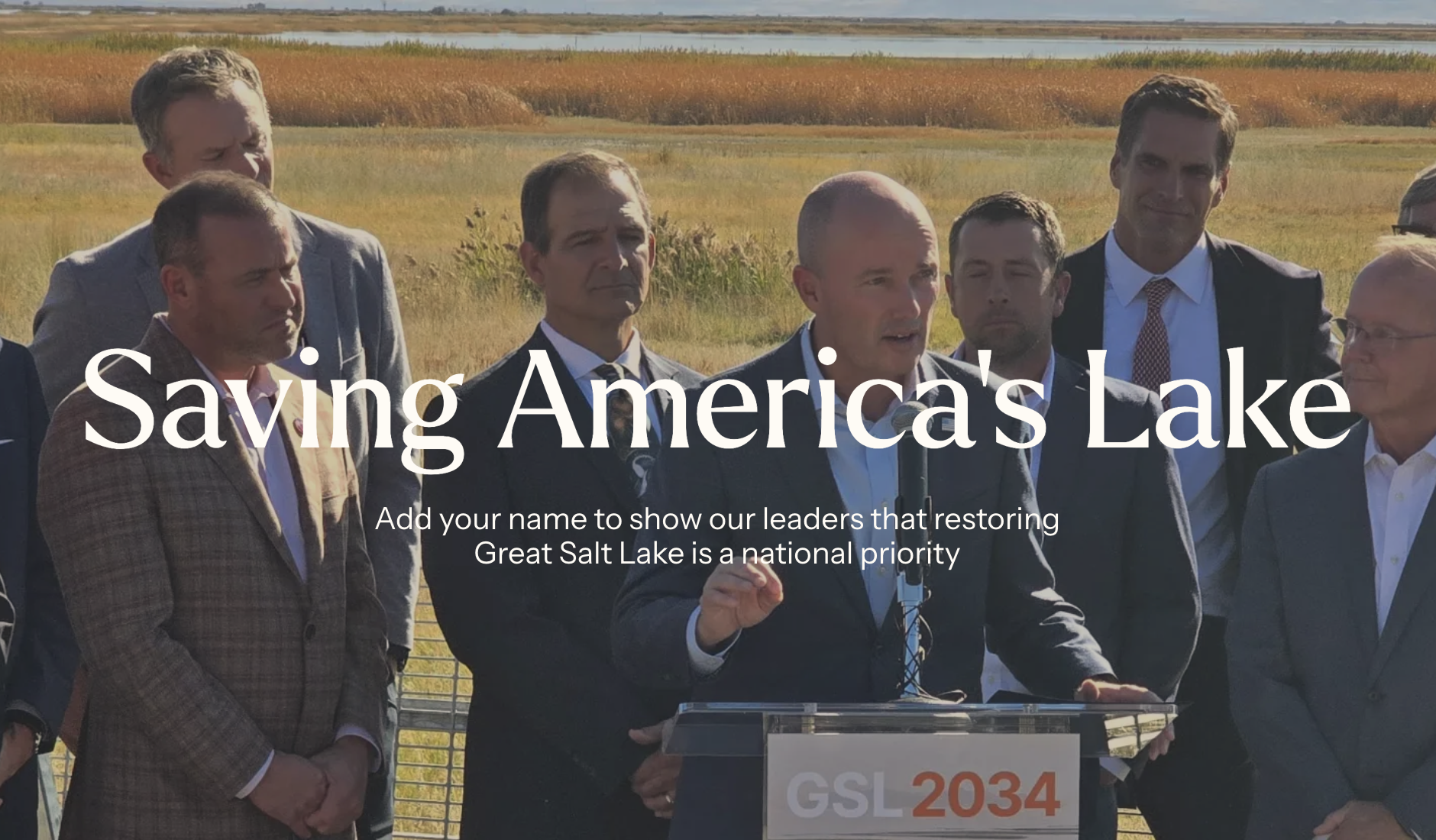
Show Your Support for Saving America’s Lake!
We’re inviting you to join leaders from across Utah in signing a public letter urging President Donald Trump, Governor Spencer Cox, and state and federal leaders to work together to secure meaningful federal investment and partnership to help restore our rapidly shrinking Great Salt Lake.
The Great Salt Lake fuels national security and manufacturing industries, supports the global food supply, protects vast public and private infrastructure, and anchors Utah’s jobs and tax base. It also generates nearly half of the region’s precipitation, serves as a critical migratory bird stopover, and helps safeguard the air quality and water future of millions across the West.
It is America’s Lake.
This letter follows the introduction of HCR 9, a bipartisan resolution from the Utah Legislature formally requesting federal partnership to help save Great Salt Lake, and comes on the heels of President Trump’s public commitment to support lake restoration efforts.
Greg Miller, Crystal Maggelet, Mark Burnett, Scott Anderson, Josh Romney, and many other prominent Utah leaders have already added their names in support of bold action to protect this vital resource.
Now we need you. We need farmers, teachers, students, small business owners, and lifelong Utahns who care about their home. We need voices from every corner of our state—and from across the country—to show that saving the lake is a nonpartisan issue that is bigger than politics and bigger than Utah alone.
When you add your name, a personalized version of this letter will be sent to President Trump, Governor Cox, Legislative Leadership, and your representatives. CLICK HERE TO ADD YOUR NAME!
Sign the Community Letter to the Salt Lake City Council
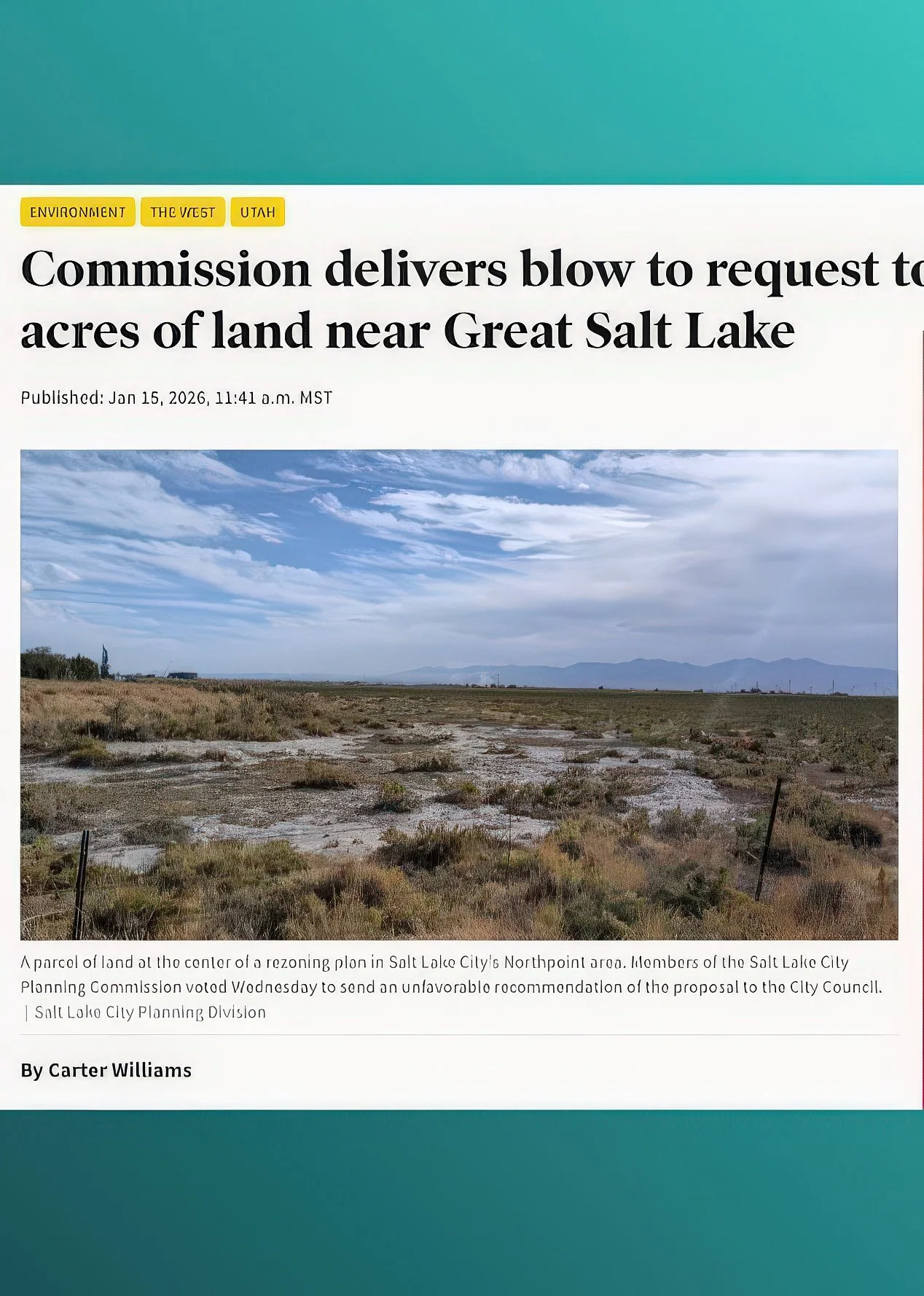
The Salt Lake City Planning Commission recently heard concerns about upzoning 80 acres of playa wetlands in the Northpoint community. Community members, wetlands biologists, environmental health and conservation advocates spoke about the previous commitment to protect this area, its biological importance, and the pollution from additional industrial development.
The SLC Planning Commission then voted *unanimously* to recommend that this property NOT be upzoned by the Salt Lake City Council. Here’s a recent news story.
Now the next stop for this issue is a hearing at the Salt Lake City Council. It’s not clear when this will happen, but between now and then, we need to let our Council Members know we would like them to vote “NO” on the upzone.
Signatures are still being collected on a community letter to the SLC Council.
Write the Salt Lake City Council a personal letter. Here’s information to help you do that.
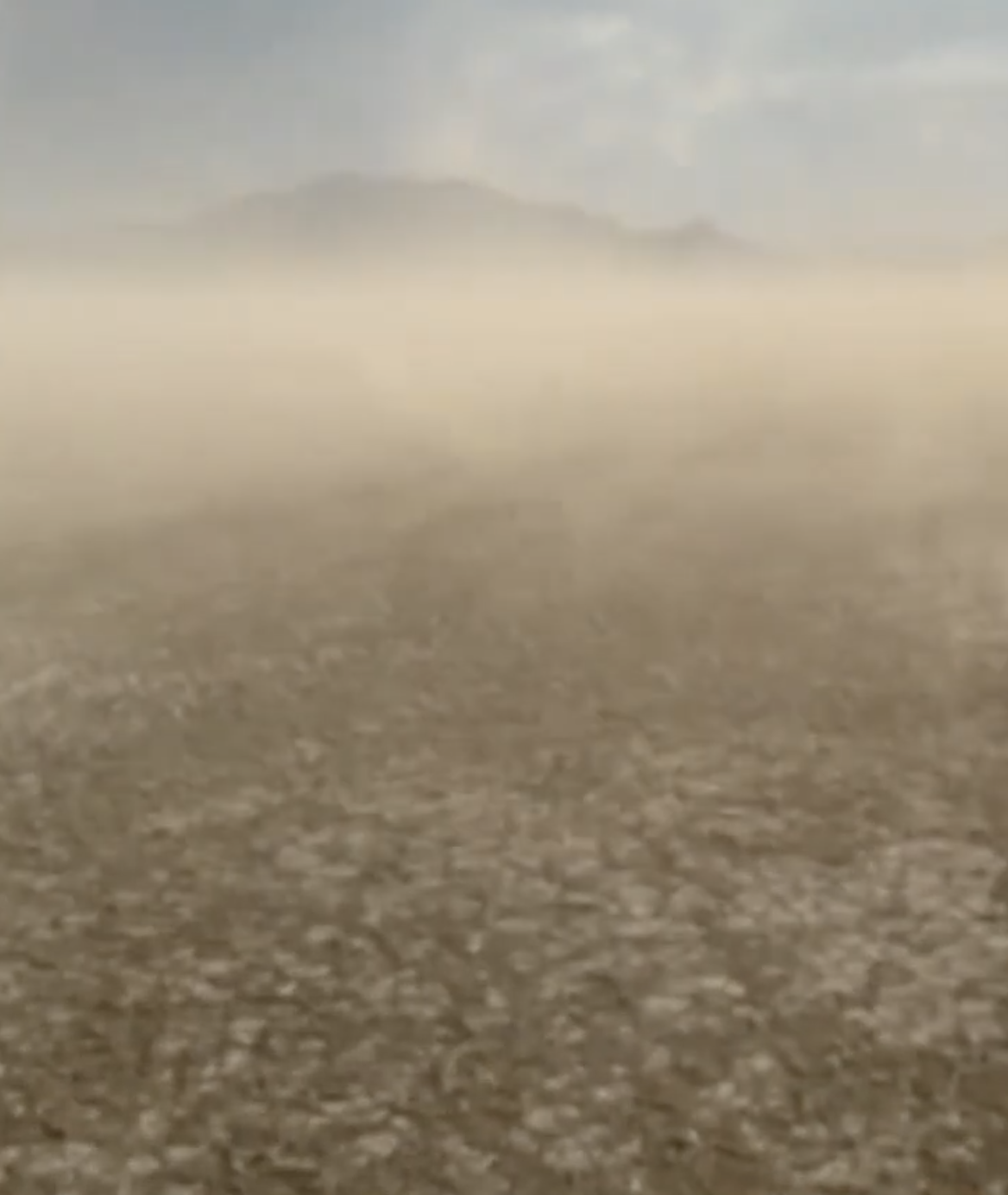
Watch This presentation by Dr. Kevin Perry given at the Salt Lake County Watershed Symposium, November 2025
This remarkable report comprehensively explores dust mitigation options for GSL. Dr. Perry builds an excellent case for investing the required significant capital to rehabilitate the lake, rather than letting it fail and trying to mitigate dust from a contaminated, exposed lake bed. Perry is a Professor in Atmospheric Sciences at the University of Utah. Watch here.
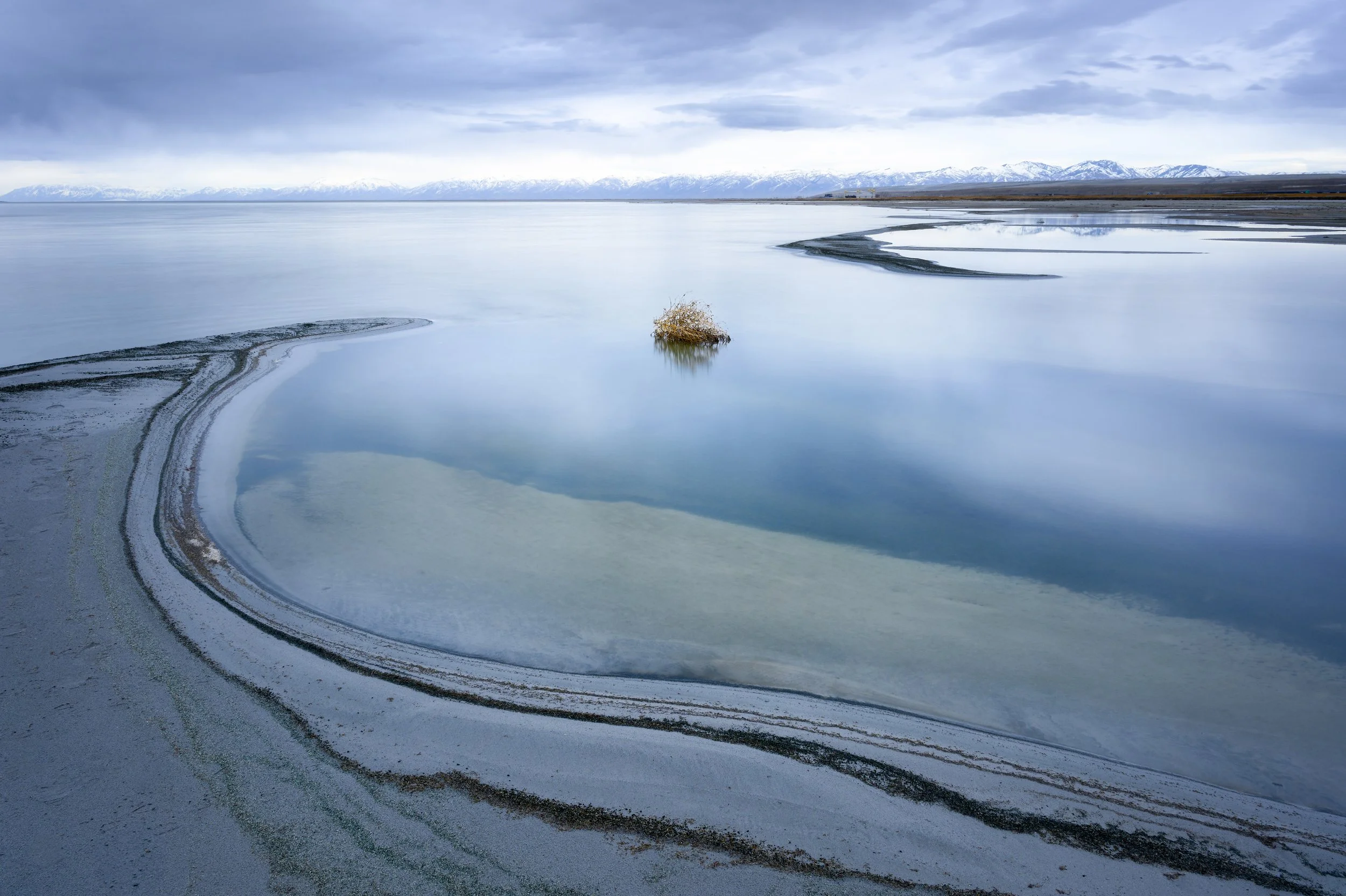
Why the lake matters
Our Great Salt Lake delivers significant value to Utah and beyond as the largest saline lake in the Western Hemisphere and a vital terminal lake ecosystem.
Economic Contributions to Utah
Contributes about $1.9 billion annually in economic output and supports over 7,700 direct jobs.
Mineral extraction (magnesium, salt, potash, and lithium) produces millions of tons yearly from evaporation ponds.
Brine shrimp cyst harvesting supplies 40-45% of the world's aquaculture feed for fish and shrimp farming.
Lake-effect snow adds 5-10% to Utah's snowpack, extending ski seasons and boosting winter tourism.
Recreation and tourism (boating, birdwatching, Antelope Island State Park) drive visitor spending.
Ecological and Wildlife Benefits
Serves as a critical migratory stopover for 10-12 million birds each year from over 300 species along the Pacific Flyway.
Brine shrimp and flies provide essential food for birds like Wilson's phalaropes, American avocets, black-necked stilts, and eared grebes, fueling long-distance migrations.
Supports diverse habitats, wetlands, and resident wildlife, including bison herds on Antelope Island.
Spiritual, Aesthetic, and Recreational Values
Spiritual: Holds deep significance for Indigenous peoples (Shoshone, Goshute, Ute, Paiute), who view it as sacred—known as Pia-pa ("big water") or similar names—with ancestral ties, burial sites, creation stories, and ongoing cultural reverence for its waters, land, and resources as kin. For others, it is a place of beauty, abundant life, and mystery that connects them to a creator and/or to the many diverse lives they share the planet with.
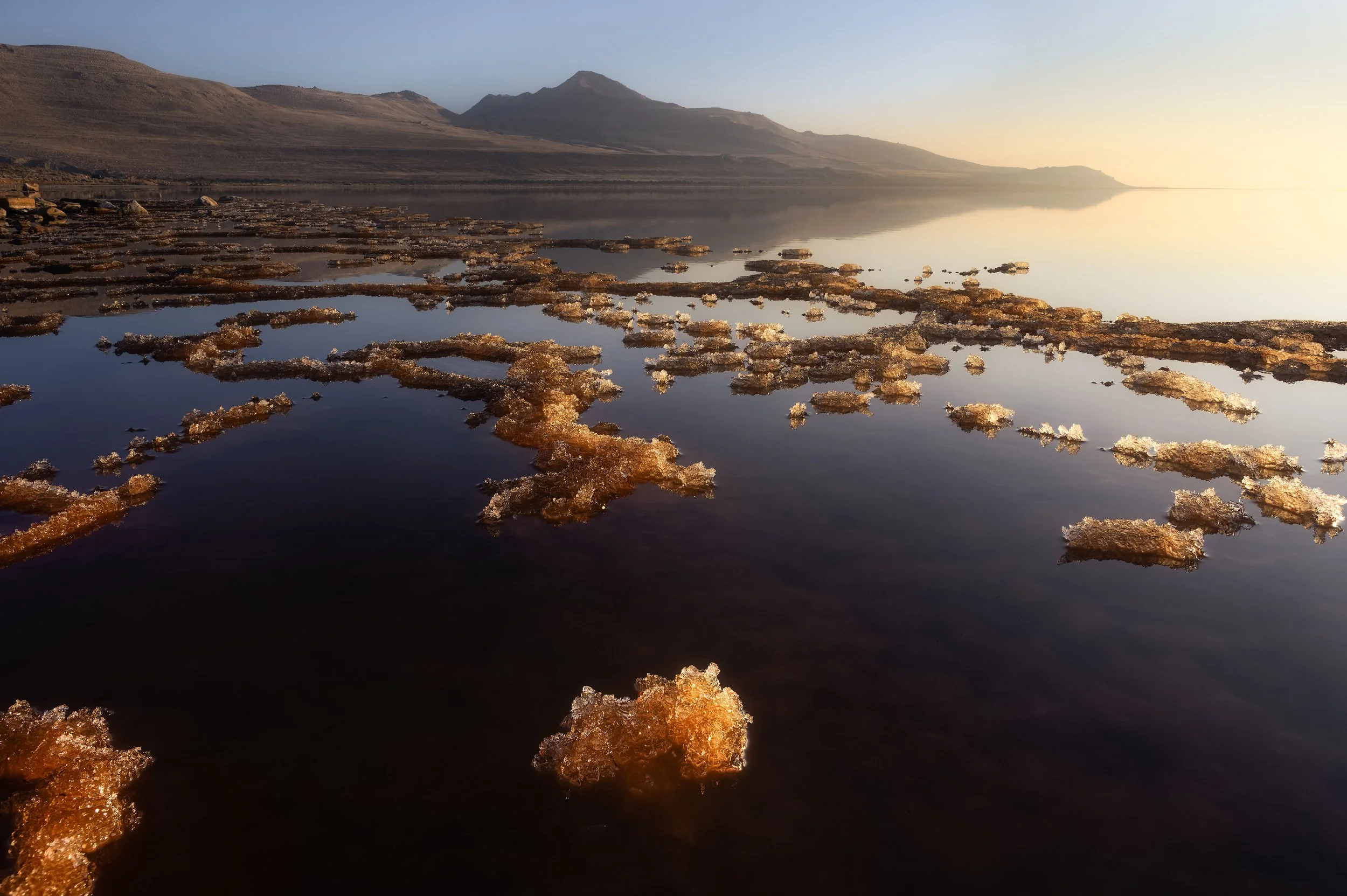
Aesthetic: Offers surreal, otherworldly beauty with turquoise waters, vast white salt flats, stunning sunsets in red/orange/lavender hues, floating horizons on overcast days, and dramatic contrasts of islands, microbialites, and open skies that inspire awe and photography.
Recreational: Provides diverse activities like floating/swimming (buoyancy from high salinity), sailing/boating/kayaking at marinas, hiking/biking trails (e.g., Buffalo Point for panoramic views), wildlife viewing (bison, birds), camping, birdwatching, and stargazing—accessible year-round at places like Antelope Island and Great Salt Lake State Parks.
Health Risks From the Lake’s Continuing Collapse
Respiratory Problems: Dust irritates lungs, worsening asthma, bronchitis, COPD, and causing coughing, wheezing, and reduced lung function. Fine particles (PM2.5) penetrate deep into the lungs and bloodstream.
Heart and Systemic Effects: Linked to inflammation, heart disease, high blood pressure, strokes, heart attacks, and higher risk of premature death.
Cancer and Chronic Risks: Elevated metals (e.g., arsenic) raise concerns for lung cancer and other long-term issues from repeated exposure.
Vulnerable Groups: Children (developing lungs, higher deposition), pregnant people, elderly, and those with preexisting conditions face greater harm. Some studies suggest disproportionate impacts on certain communities (e.g., Hispanic, lower-income).
We have a lot to lose, but there is hope! There is you. There is “us.”
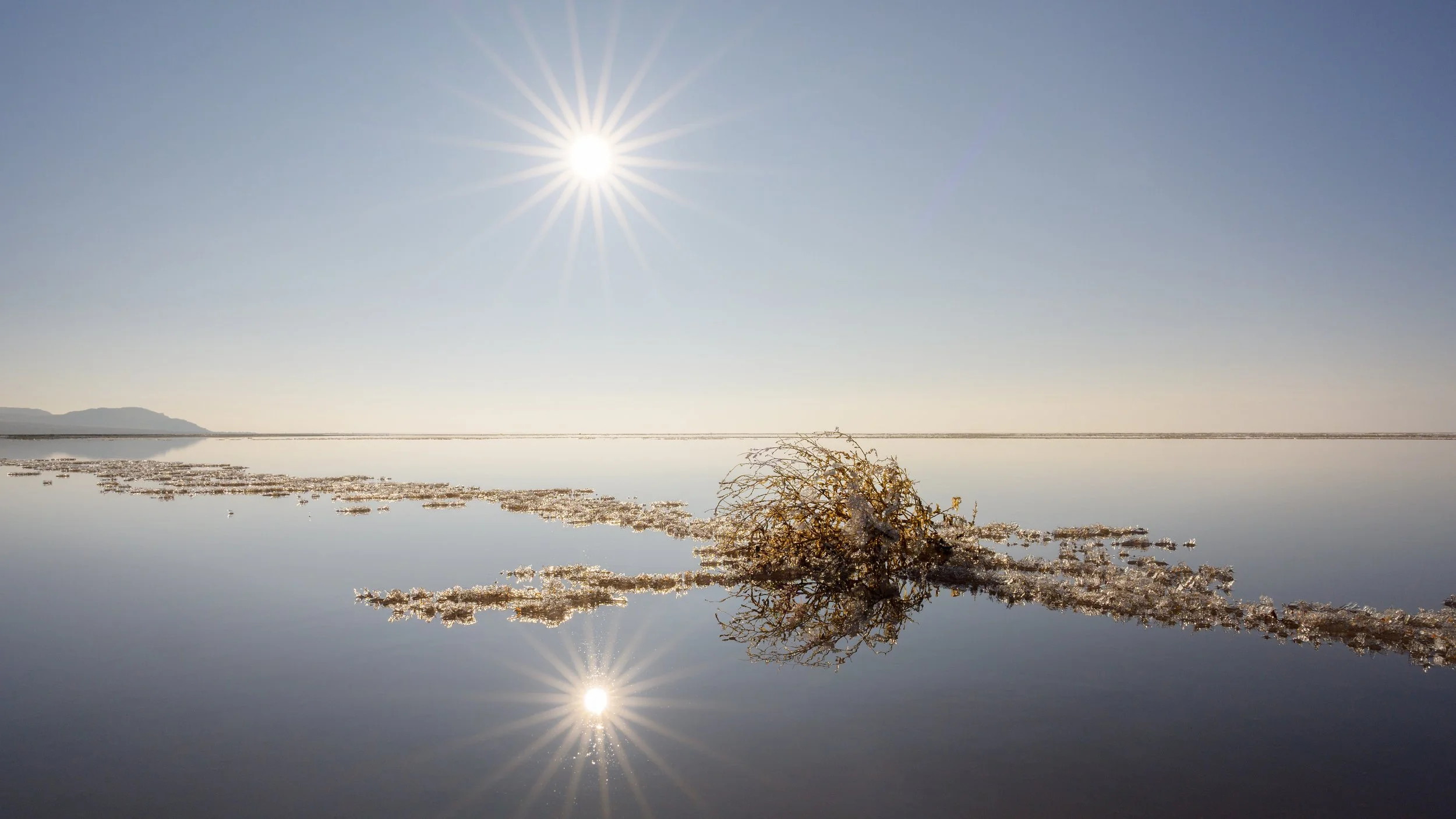
Watch the 2025 Watershed Symposium presentations
If you missed any or all of the sessions at the Salt Lake County Watershed Symposium in November 2025, you can watch them here. This is some of the latest data and thinking about how to rescue Great Salt Lake.
Deepen Your Knowledge About Our Lake
Why you matter
Because if not you, who? Research has repeatedly shown that people of faith tend to act more often on behalf of causes they believe are important.
Religiosity is positively associated with volunteering and civic engagement. (Source)
Religious involvement often builds social networks that motivate action on important causes. (Source)
Here’s what you can do:
Write Your Legislators
The Governor and Legislative leadership recently committed to restoring GSL by 2034. Thank them for their GSL 2034 commitment. Ask them to double down by supporting sensible, non-partisan water policy and funding requests this session. To find your legislator, go to GrowTheFlowUtah.org/write-legislators
Host A GSLIA Information Table
Whenever possible, we provide a table at major events to answer questions about our lake, GSLIA’s mission to help save it, and encourage engagement in helping save our lake. We will help prepare you and can often pair you with someone who has experience hosting a table. Please contact us if you’d like to help!
Reduce Your Water Use
Outdoor water use for lawns and landscaping accounts for 60% of all residential water consumption, and 96% of water is depleted. By flipping your strip, upgrading to water-efficient landscaping, or installing smart meters, you can save money and water! Plus, there are many ways to reduce water in your home or at work. Learn what you can do as well as what rebates and subsidies are available at SlowTheFlow.org. Or watch this informative video from Madeline Sueltz with Jordan Valley Water Conservation Park.
Spread the Word
One of the easiest actions we all can take is bringing GSL to the communities we are a part of. In an era of political polarization, Our Great Salt Lake can bring together all kinds of Utahns. Have a conversation about the Lake rooted in values and faith with someone you disagree with. Ask five of your friends and family to join the cause. Gather some folks together to have a conversation about the Lake.
Feeling a bit uncomfortable engaging with folks or family who may not agree with you? Go to LivingRoomConversations.org for help. And here’s 12 tips to spark more meaningful, authentic conversations.
Educate the Members of Your Faith Community
Despite the media coverage and urgency, there are many people who don’t think about our Great Salt Lake. Or if they do, they only think of it as salty, shallow, smelly, and buggy. Share with them your love for the lake and why it matters to you and why it matters to them. Help them understand how the lake’s health affects their health, and especially more marginalized populations. Feel free to share this website with your faith leaders and friends!
Fast and Pray
Fasting is a common tradition in nearly every religious faith. It can help us focus on what matters most and turn our prayers into action. One way to approach it is to fast for two or more meals a month and donate the money you would have spent on food to an organization that is supporting the lake. Another idea is to fast by using less water each day, week, or month.
Donate to Help the Lake
These are just a few of the legit organizations that will put your money to good use in saving the lake:
Grow the Flow | GSL Watershed Enhancement Trust | Friends of Great Salt Lake
Give yourself or a Friend a GSL License plate
Proceeds help fund lake restoration. Order at dmv.utah.gov/plates/license-plates/gsl/
Attend Our Monthly GSLIA Committee Meetings
We meet on Zoom, conduct committee business, and often enjoy guest speakers. Some past speakers include Deeda Seed, Stop the Polluting Port Coalition; Jake Dreyfous and Ben Abbott, Grow the Flow; Zach Frankl and Amy Wick, Utah Rivers Council; Dr. Brian Moench, Utah Physicians for a Healthy Environment; Madeline Sueltz, Jordan Water District Conservation Gardens; David Wright, Landscape architect with The Church of Jesus Christ of Latter-Day Saints. Sign up here to be notified of our meetings.
Participate in Upcoming Events
There’s always something happening that you can join in on. Grow the Flow keeps a running list of current events. Go here to see what is coming up.
Share Your Ideas With Us
There are so many ways we can make a difference that one person or group cannot think of them all. We’d love to hear yours so that we can share them. Talk to us!